


Bakelite Jewellery: A Collector's Guide

Bakelite jewellery is early phenolic resin jewellery produced mainly between the 1920s and 1940s, and it remains one of the most passionately collected vintage materials in the UK. If you want authentic pieces, the three things to check first are weight, the absence of mould seams, and patina. Chemical tests help, but they are not the whole story.
Here is what every UK buyer should know before spending a penny:
Authenticity hinges on multiple checks. Weight, hand-finished patina, and the lack of mould seams matter as much as any chemical test. No single test is definitive.
Condition and provenance drive price. Chips, crazing, and repairs all reduce value; documented history increases it.
Buy from vetted channels. Auction houses such as Bonhams, UK dealer directories like Antiques Atlas, and curated sellers like My Vintage offer the strongest buyer protection and the clearest provenance trails.
Prices vary enormously. A simple single-colour bangle can cost as little as £20 from a specialist, while rare carved or signed pieces reach hundreds or even thousands of pounds.
How do you quickly tell if a piece is genuine Bakelite?
The fastest checks are tactile. Pick the piece up: genuine Bakelite feels noticeably heavy and solid for its size, with a warmth to the touch that modern plastics rarely replicate. Run your fingertip across the surface and you should feel a smooth, slightly waxy finish, not the slick gloss of acrylic.

Next, look for manufacturing evidence. Authentic period Bakelite was cast rather than injection-moulded, so authentic pieces show no mould seams. Any visible seam running along the edge of a bangle or brooch is a strong indicator of a later plastic. Look also at the fastenings: period brooches use embedded rivets or early screw-back fittings, not the lightweight modern clips found on contemporary costume jewellery.
Colour and patina tell their own story. Butterscotch, cherry red, amber, and tortoiseshell are classic Bakelite colourways, and decades of oxidation often deepen or shift these tones. A butterscotch piece may have mellowed to a rich mustard; a cream piece may have taken on a warm caramel cast. Bright, uniform, almost neon colours with no patina at all are a red flag.
Quick exclusions to keep in mind:
Visible mould seams along edges or joins
Ultra-bright, uniform colour with no surface variation
A very light, hollow feel when tapped
A high-pitched “tink” sound rather than a deep, resonant clunk
Pro Tip: If you need to do a discreet smell test in a shop, rub the piece firmly with your thumb for a few seconds and bring it close to your nose. Genuine Bakelite produces a faint formaldehyde or carbolic scent. Skip this on pieces with delicate painted or lacquered finishes, as friction can damage them.
What tests do collectors use to identify Bakelite?
Several complementary identification methods are widely used, and the consensus among experienced collectors is clear: combine at least three before drawing a conclusion.
The hot-water smell test is the most accessible. Hold the piece under warm running water for about thirty seconds, then smell it immediately. Genuine Bakelite releases a distinctive formaldehyde or carbolic acid scent. A burnt-plastic smell points to a later material.
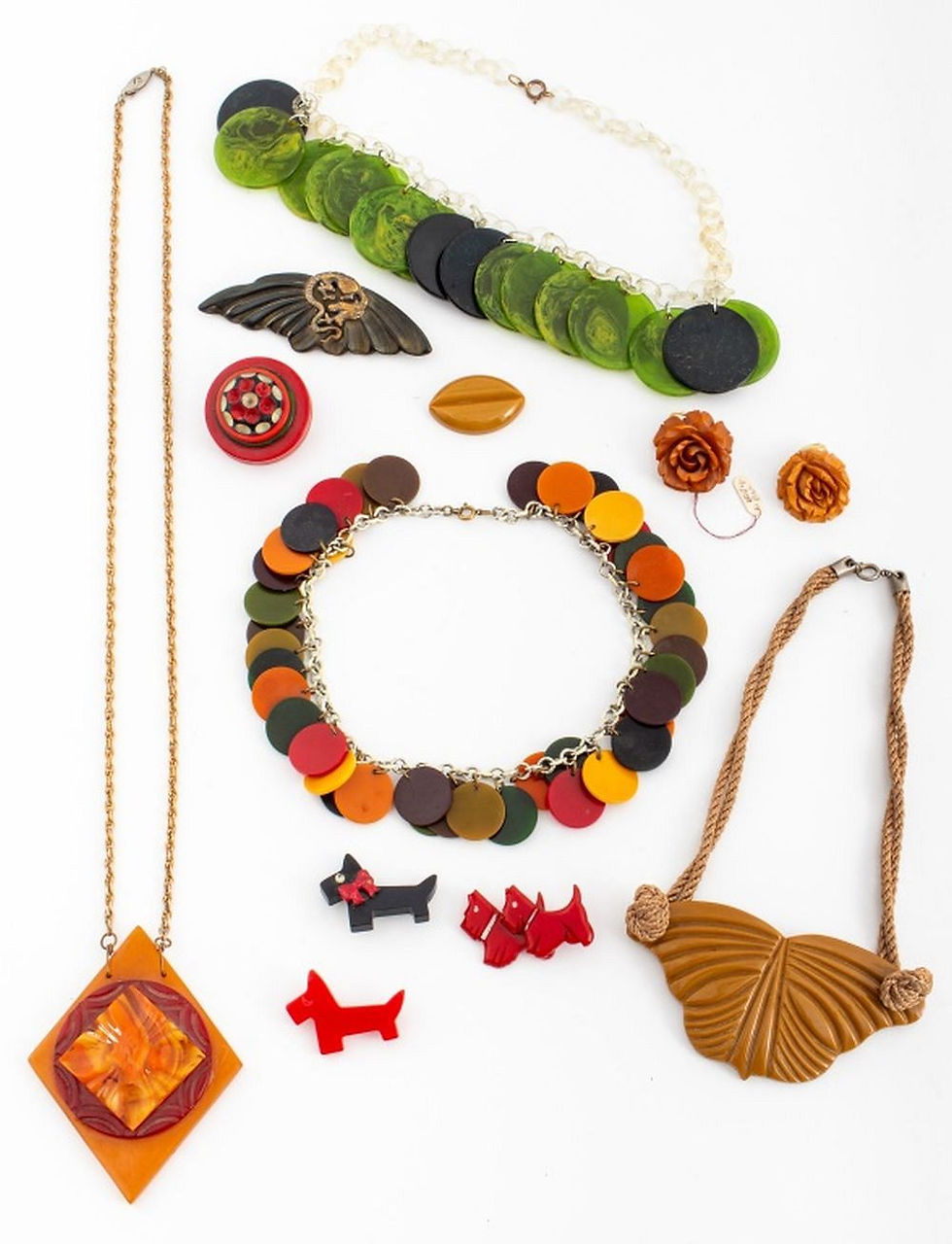
The Simichrome test is the most commonly cited chemical check. Apply a small amount of Simichrome metal polish (or Formula 409 cleaner) to a cotton bud and rub an inconspicuous area. A yellow residue on the bud, regardless of the piece’s colour, is a positive result. No residue, or a residue that matches the piece’s colour, suggests a different plastic.
The sound and weight test costs nothing. Tap two suspected Bakelite pieces together: the sound should be a deep, hollow clunk rather than a sharp tink. Combined with the heft test described above, this is a useful first filter.
Limits and safety warnings to keep in mind:
Some genuine Bakelite pieces fail the Simichrome test due to overdyeing or surface treatments; conversely, some modern plastics can be engineered to pass it. Context and provenance remain decisive.
Avoid hot-pin tests entirely. They damage the surface permanently and are not reliable enough to justify the destruction.
Acetone and other solvents can strip finishes and should not be used on carved or painted pieces.
If a piece has an unusual finish, laminated layers, or suspected high value, stop testing and consult a specialist.
Pro Tip: Run the smell test, the Simichrome test, and the sound/weight check independently before reaching a verdict. Three positive results from three different methods is a far stronger signal than one test repeated three times.
Which colours and styles do collectors prize most?
The colour range of period Bakelite is one of its great joys. Butterscotch, cherry red, amber, and tortoiseshell are the most familiar colour-ways, but the material was also produced in forest green, cobalt blue, creamy white, and jet black. Over decades, oxidation shifts these tones: butterscotch deepens to mustard, and pale cream warms to caramel. Bright, unpatinated pieces with uniform colour are less likely to be period originals.

Certain styles attract serious collector interest. Carved bangles, marbled “end of day” pieces, and figural pins sit at the top of the desirability ladder. “End of day” pieces were made from leftover scraps of different colours swirled together, producing unique marbled effects that can never be exactly replicated. Carved bangles, particularly those with deep geometric or floral relief work, show the hand-finishing that sets period Bakelite apart from later machine-made plastics. For vintage bracelet styles, the carved bangle remains the single most sought-after form.
Figural brooches deserve a special mention. Animal motifs, fruit clusters, and Art Deco geometric shapes are all collected, and certain designs by named makers command significant premiums. Auguste Bonaz, who worked in Paris in the 1920s and 1930s, is among the most cited names; pieces attributed to him appear regularly in specialist auction catalogues.
Catalin is a related phenolic resin that was produced in a wider colour range and is often more translucent than true Bakelite. Collectors value it differently: Catalin pieces are genuine vintage plastics and can be beautiful, but they are not identical to Bakelite, and understanding the differences between vintage plastics helps you buy and price with confidence. Modern makers also occasionally use reclaimed Bakelite stock to craft new pieces; these can be lovely, but they are not period originals and should be priced accordingly.
Is Bakelite jewellery worth anything, and what drives the price?
The short answer is yes, often considerably. The longer answer is that value depends on a cluster of factors working together, and the UK market reflects that complexity.
Primary value drivers:
Rarity and colour. Deep, saturated colours such as cobalt blue, forest green, and cherry red command premiums. “End of day” marbled pieces and laminated multi-colour bangles are among the most valuable forms.
Condition. Chips, cracks, and significant crazing reduce value sharply. Minor surface wear consistent with age is expected and acceptable; structural damage is not.
Authenticity and provenance. Documented provenance materially increases buyer confidence and final price. An auction catalogue entry or a receipt from a known dealer adds real value.
Style and maker. Carved and figural pieces outperform plain bangles. Signed or attributed pieces, particularly those linked to named couture houses, can reach prices that surprise newcomers to the market.
Market channel | Rarity/colour | Condition grading | Authenticity checks | Style/era focus | Typical characteristics |
Auction house | Rare and unusual pieces appear regularly | Condition noted in catalogue | Provenance trail often available | Period and maker attribution common | Buyer’s premium applies; competitive bidding |
Specialist antique dealer | Curated stock, often pre-selected for quality | Detailed condition reports | Expert eye applied before listing | Strong era and style knowledge | Higher asking price; inspection possible |
Curated online vintage seller | Variable but vetted | Condition described in listing | Seller vetting provides baseline assurance | Broad range of styles | Convenient; returns policy varies |
Flea market / general marketplace | Unpredictable | Condition often undescribed | Buyer bears full authentication risk | Mixed eras and materials | Lowest prices; highest risk |
For UK auction records and past sale prices, Bonhams is a useful starting point. Antiques Atlas lists specialist dealers across the UK and allows you to search by category, making it a practical tool for finding pieces without travelling to every antique centre in the country.
Buying costs to budget for beyond the item price include auction buyer’s premiums (typically a percentage of the hammer price), specialist authentication fees if you commission an independent appraisal, and shipping or insurance for higher-value pieces.

Where do UK collectors actually find authentic Bakelite?
Auction houses offer the strongest provenance trails for higher-value pieces. Bonhams and regional auction houses regularly include vintage jewellery in their costume and decorative arts sales. The buyer’s premium adds to the final cost, but the catalogue descriptions and condition reports provide a level of documentation that private sales rarely match.
Specialist antique dealers are often the best source for collectors who want to inspect a piece in person and ask detailed questions. Dealers who focus on vintage costume jewellery, such as those listed on Antiques Atlas, typically have genuine expertise and will have applied their own eye before pricing a piece. Prices tend to be higher than at auction, but so is the confidence level.
Curated online vintage sellers such as My Vintage offer the convenience of browsing from home with the reassurance of a vetted stock selection. My Vintage has been operating since 2004 and supplies costume pieces to television, film, and theatre productions, which means the team handles and assesses vintage materials regularly. Detailed product photography and clear condition descriptions are the minimum to expect from any reputable online seller.
Flea markets and general online marketplaces carry the highest risk. Mislabelling is common, condition is often undescribed, and return options are limited. They can yield genuine finds at low prices, but only if you are confident enough in your own identification skills to buy without a safety net.
Channel | Authenticity assurance | Ability to inspect | Return options | Buyer protection |
Auction house | High (catalogue + provenance) | Pre-sale viewing | Limited post-sale | Strong for described lots |
Specialist dealer | High (expert-selected) | In person | Negotiable | Good |
Curated online seller | Medium-high (vetted stock) | Photos only | Policy varies | Reasonable |
Flea market / marketplace | Low | Sometimes in person | Rarely available | Minimal |
When hunting pieces, set up search alerts on Antiques Atlas for “Bakelite jewellery” and check auction house upcoming sale calendars regularly. Pieces appear unpredictably, and the best finds go quickly.
What should you check before buying a piece?
A systematic approach saves money and regret. Work through this checklist whether you are buying in person or online.
Inspect condition first. Look for chips, cracks, crazing, and repairs. Check hidden areas such as the inside of a bangle or the back of a brooch, where damage is often concealed.
Run your identification checks. Apply at least three independent tests (smell, Simichrome, sound/weight) before concluding the piece is genuine.
Examine the fittings. Period-correct fastenings such as embedded rivets and old screw-back fittings are stronger authenticity indicators than surface appearance alone.
Ask about provenance. Request the piece’s history: previous ownership, how long the seller has had it, and whether it has appeared in any auction or appraisal record.
Ask about restoration. Has the piece been polished, repaired, or re-drilled? Restoration affects both value and test results.
Request detailed photographs. For online purchases, ask for images of the back, the clasp, any worn areas, and a close-up of the surface finish.
Confirm the returns policy. A reputable seller will offer some form of recourse if the piece turns out to be misrepresented.
Budget for the full cost. Factor in buyer’s premiums, authentication fees if needed, postage, and insurance for valuable pieces.
On timing: sourcing a specific piece can take anywhere from a few days (if you find it immediately on a dealer site) to several months of watching auction calendars and dealer listings. Authentication, if you commission a specialist appraisal, typically adds one to two weeks. Allow extra time for postage and insurance on higher-value purchases. For collecting with confidence, patience is genuinely part of the process.
How do you care for and store Bakelite jewellery?
Bakelite is a vintage material and should be treated as one. The basics are straightforward, but the common mistakes are easy to make.
For everyday cleaning, a soft dry cloth is usually all you need; for styling tips and how travel influences modern accessory trends, see our guide on travel-inspired jewelry trends. If a piece needs more attention, a barely damp cloth with a tiny amount of mild soap works well; dry it immediately afterwards. Avoid prolonged sun or heat exposure, strong detergents, abrasive cloths, and ultrasonic cleaners. Perfume and hairspray are also worth keeping away from your pieces, as the chemicals in both can dull the finish over time.
Storage matters more than most people realise. Store pieces in cool, dark conditions and avoid plastic containers, which can cause crazing through off-gassing. Fabric pouches or wooden boxes are ideal. Keep pieces separated so they do not knock against each other, and away from direct sunlight, which accelerates colour change.
If you notice a persistent formaldehyde smell from a stored piece, it may be degrading. This is worth flagging to a conservator rather than ignoring. For serious chips or structural repairs, seek professional conservation rather than attempting DIY fixes, which can reduce value significantly.
Pro Tip: A small amount of Simichrome polish applied occasionally with a soft cloth will gently clean and buff a Bakelite piece without damaging it. It also doubles as a quick authenticity check. Use sparingly and buff off thoroughly.
Why tests alone are not enough: the case for developing your eye
Tests are useful starting points, but they are not the final word. Chemical tests such as Simichrome are standard but not 100% reliable; developing a genuine eye for Bakelite, through weight, hand-finished patina, and the absence of mould seams, is the most reliable selector for authenticity.
Gillian Horsup, one of the UK’s most respected vintage costume jewellery specialists, is clear on this point: experience with the material is what separates confident collectors from anxious ones. The Simichrome test can be fooled by overdyed pieces or surface treatments, and some modern plastics are engineered to mimic the chemical response. Provenance and context fill the gaps that chemistry cannot.
The practical advice is to treat each test as one vote, not a verdict. Sensory checks, physical examination, provenance research, and chemical tests together build a picture that no single method can provide alone. For high-value or ambiguous pieces, commission an independent appraisal from a specialist in vintage plastics or costume jewellery before completing the purchase.
Pro Tip: Handle as many confirmed genuine pieces as you can, even if you are not buying. Antique fairs, museum collections, and specialist dealers are all places where you can build the tactile and visual memory that makes identification feel instinctive.
Key takeaways
Authentic Bakelite jewellery is identified by a combination of weight, patina, cast finish, and multiple independent tests, then bought most safely through vetted UK channels with clear provenance.
Point | Details |
No single test is definitive | Combine smell, Simichrome, and sound/weight checks before concluding a piece is genuine. |
Condition and provenance drive value | Chips and crazing reduce price sharply; documented auction or dealer history increases it. |
Rare colours and carved styles command premiums | “End of day” marbled pieces and carved bangles are among the most collectible forms. |
Use vetted UK channels for higher-value pieces | Bonhams, Antiques Atlas, and curated sellers provide the strongest authenticity and provenance assurance. |
My Vintage as a vetted UK source | My Vintage has curated vintage stock since 2004, with detailed descriptions and a team experienced in handling period materials. |
My Vintage: vetted vintage pieces, no guesswork
Finding genuine Bakelite jewellery takes patience, knowledge, and a seller you can trust. My Vintage has been curating authentic vintage pieces since 2004, supplying collectors, enthusiasts, and media productions alike with carefully selected stock. Every piece comes with detailed photography and honest condition descriptions, so you know exactly what you are getting before it arrives.
The team’s experience spans decades of handling period materials, from Art Deco accessories to mid-century costume jewellery, which means the curation process is genuinely informed rather than opportunistic. Whether you are building a bakelite bracelet collection or hunting for a statement brooch, My Vintage is a natural first stop for UK buyers who want quality without the uncertainty of unvetted marketplaces. Browse the current vintage jewellery and accessories selection at My Vintage and find your next piece with confidence.
Recommended


Comments