


Iconic Vintage Prints: Examples for Collectors and Lovers
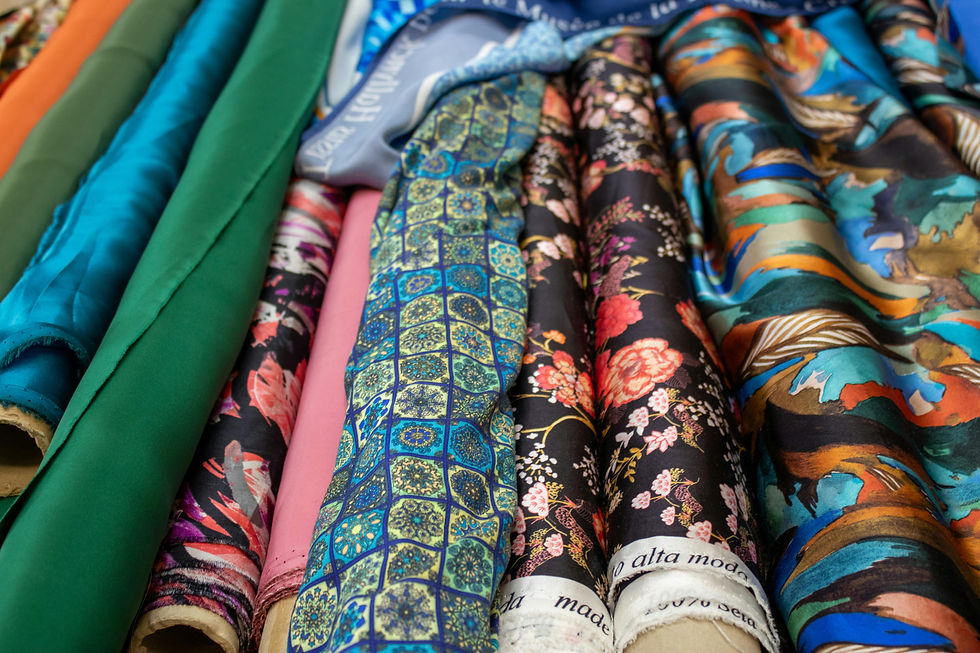
There is something genuinely thrilling about holding a piece of fabric that has survived decades, its pattern still vivid, its story still alive. But with so many modern reproductions flooding the market, knowing the difference between an authentic vintage print and a clever imitation is a skill worth cultivating. Whether you are building a wearable wardrobe or a serious collection, the right print can transform everything. In this guide, we explore the most iconic print styles across the mid-20th century, from polka dots and paisley to novelty photo fabrics and florals, giving you the knowledge to choose with confidence and collect with joy.
Point | Details |
Verify authenticity | Check for era-specific details, wear, and provenance to ensure a print is genuinely vintage. |
Era influences style | Each major era offers distinct print styles, such as 1940s polka dots or bold psychedelic 60s florals. |
Value lies in story | Prints with clear provenance and unique design often hold the greatest appeal for collectors. |
Mix with care | Blending vintage prints works best when considering scale, colour, and period context. |
How to Recognise Authentic Vintage Prints
Authentication is where every serious collector must begin. A genuine vintage print carries clues in its construction, its fabric, and even its imperfections. Knowing what to look for separates a worthwhile find from an expensive mistake.
Here are the key identifiers to check before buying:
Label and care tags: Pre-1971 garments in the UK and US lack modern fibre content labels. Older labels often feature different fonts, stitching styles, and country-of-origin wording.
Fabric composition: Authentic mid-century pieces frequently use rayon, cotton lawn, or early synthetics like nylon. Fast fashion polyester blends are a red flag.
Print technique: Screen printing and block printing were dominant before the 1980s. Look for slight colour registration inconsistencies, which are actually signs of hand or early mechanical printing.
Colour ageing: Authentic vintage colours often show a softened, slightly faded quality. Reproductions tend to look uniformly bright and crisp.
Provenance: Where has the garment been? A documented history, original receipts, or photographs of the piece being worn add significant credibility.
As any seasoned collector will tell you, condition, provenance, and rarity are the trinity of value in print collecting. Rarity drives desirability, condition protects investment, and provenance adds the storytelling that makes a garment truly irreplaceable.
Context matters enormously. A print might look convincingly vintage but still be a 1990s revival edition. Understanding vintage clothing value factors helps you assess whether a piece merits its asking price.
Pro Tip: Carry a small loupe or magnifying glass when shopping. Screen-printed vintage fabrics show a characteristic dot pattern up close that differs noticeably from modern digital printing methods.
With authentication criteria in mind, let’s explore the most influential vintage print styles by era.
Polka Dots: A Playful Icon Across the Decades

Few prints carry the joyful, timeless energy of polka dots. They have appeared on everything from flapper dresses to pop art mini skirts, and their appeal has never truly faded.
Polka dots emerged in the mid-19th century, but their most glamorous early peak arrived in the 1920s and 1930s, when flapper fashion embraced the bold, circular motif as a symbol of modernity and playfulness. Against the fluid silhouettes of bias-cut dresses, dots created a striking visual tension that felt both fun and sophisticated.
By the 1950s and 1960s, polka dots had found a new home in rockabilly fashion and pop culture dressing. Think full-skirted day dresses in navy and white, halter-neck tops paired with pedal pushers, and swimwear that channelled a carefree, sun-soaked spirit. Icons of the era wore dots with a bold confidence that felt entirely of its time.
Key moments in polka dot history:
1920s-30s: Flapper dresses and silk blouses in fine dots, often in black and white or two-tone colour schemes
1940s: Utility fashion adopted smaller, more restrained dot patterns as fabric rationing shaped design
1950s-60s: Full skirts, shirtwaister dresses, and circle skirts in large graphic dots became staples of everyday dressing
1970s onwards: Dots featured in jersey wrap dresses and blouse styles, reflecting a more relaxed approach to print
2025 revival: Houses including Valentino and Balmain brought polka dots back to the runway with fresh energy
“Polka dots are one of those rare patterns that feel simultaneously nostalgic and completely of the moment. The joy lies in how they carry decades of fashion history without ever feeling stuck in the past.”
For collectors, retro polka dot dresses from the 1950s and 1960s represent some of the most wearable and visually striking pieces available. When sourcing, pay close attention to dot scale, colour contrast, and fabric condition. Explore our guide to vintage dress patterns for deeper context on identifying era-specific silhouettes. You can also browse our guide to iconic vintage patterns for a broader overview of print styles worth knowing.
Having seen the playful influence of polka dots, let’s move to the exotic and symbolic paisley pattern.
Paisley: Counterculture’s Timeless Motif

Paisley is one of fashion’s most travelled patterns. Its journey from ancient Persia to the streets of 1960s London is a story of cultural exchange, artistic reinvention, and enduring desirability.
The pattern originated in Persia as the ‘boteh’, a teardrop-shaped motif representing a cypress tree or a flame. It travelled westward through Kashmir shawls in the 18th century, eventually reaching British weavers in the Scottish town of Paisley, which gave the pattern its Western name. By the Victorian era, Paisley shawls were prized accessories for middle and upper-class women.
The real cultural explosion came in the 1960s and 1970s, when paisley became synonymous with counterculture dressing. Rock musicians, artists, and style icons adopted it as a visual language of rebellion and individuality. Swirling, richly coloured paisley appeared on shirts, scarves, kaftans, and tailored jackets, often in jewel tones of teal, burgundy, and gold.
Why does paisley remain so desirable for collectors today?
It carries deep historical layering across multiple cultures and centuries
Authentic 1960s-70s paisley pieces in good condition are increasingly rare
The pattern translates beautifully across garment types, from accessories to outerwear
Colour complexity in genuine vintage paisley is difficult to replicate with modern printing
For a beautiful starting point, our paisley scarf example showcases the rich colour depth and intricate detail that makes vintage paisley so compelling. If you want guidance on wearing it today, our advice on styling paisley prints offers practical and inspiring ideas.
Pro Tip: When assessing vintage paisley, look at the colour registration under good light. Authentic screen-printed pieces from the 1960s show subtle overlapping colour edges that give depth and warmth impossible to replicate digitally.
Paisley’s symbolism and cultural layering provide a deep backdrop; now, discover photo and novelty prints that define the boldness of the 1940s.
Novelty and Photo Prints: The 1950s Bold Statement
If you want a garment that genuinely stops people in their tracks, look no further than 1940s novelty and photo prints. These are the conversation pieces of any vintage collection.
Photo-printed fabrics became a fad in the 1950s, alongside novelty prints featuring tropical scenes, city skylines, whimsical animals, and photographic collages of objects like seashells, cocktail glasses, and playing cards. Designers and fabric manufacturers embraced the idea that fabric could be a canvas for storytelling, not just decoration.
These prints appeared on day dresses, blouses, and beach cover-ups, giving everyday women a way to express personality and humour through their clothing at a time when post-war optimism was beginning to build.

Motif type | Common themes | Collectability signal |
Tropical scenes | Palm trees, exotic birds, fruit | High, especially Hawaiian-style |
City and travel | Landmarks, maps, postcards | Very high, rare in good condition |
Photographic collage | Objects, animals, faces | Premium for clear, unfaded prints |
Novelty conversational | Food, games, hobbies | Strong demand from specialist collectors |
In modern vintage circles, collecting novelty prints is a growing pursuit. Rare examples with vivid, unfaded printing and intact construction command premium prices at auction and in specialist shops. The more specific or unusual the motif, the higher the desirability tends to be.
Key factors that add value to novelty and photo prints:
Unusual or highly specific subject matter (for example, a printed fabric featuring a named city or landmark)
Vivid colour retention with minimal fading
Strong, intact seams and original buttons or fastenings
Evidence of quality construction rather than utility wartime simplicity
The uniqueness of novelty and photo prints leads us next to the perennial appeal of florals and their transformation across eras.
Florals: From Victorian Elegance to the Swinging 60s

Floral prints have never truly left fashion. Their journey from the restrained botanical illustrations of the Victorian era to the bold, psychedelic blooms of the 1960s is one of the most fascinating visual transformations in textile history.
Floral patterns evolved from Victorian delicate designs to the graphic boldness of 1960s fashion and the romantic countryside prints made famous by Laura Ashley in the 1970s. Each era left a distinct imprint on how flowers were rendered and worn.
How floral prints evolved across key eras:
Victorian and Edwardian: Soft colours, highly detailed botanical accuracy, small repeating motifs on fine cotton and silk
1940s: Utility-influenced small florals in muted tones, often on rayon challis or cotton lawn
1950s: Bolder, more graphic florals on full-skirted day dresses, often in high-contrast colour combinations
1960s: Oversized blooms in psychedelic palettes appeared on shift dresses and mini skirts, influenced by pop art
1970s: Laura Ashley brought romantic, sprigged florals back to mainstream fashion in a country-cottage aesthetic
“There is a floral print for every collector, from the quietly beautiful Edwardian botanical to the gloriously loud 1960s graphic bloom. The joy lies in finding the one that speaks directly to you.”
For wearable collecting, the 1950s framed floral shirtwaister dress represents exactly the kind of find that bridges genuine historical significance with everyday wearability. Once you have found your floral treasure, understanding how to care for vintage florals properly ensures it survives for another generation.
With a gallery of prints explored, let’s compare their key characteristics side by side.
Comparison of Vintage Print Eras and Best Picks
Choosing between print styles can feel overwhelming when each carries its own history and appeal. This comparison helps clarify which prints suit different collecting goals.
Print style | Era | Collectability | Wearability | Rarity |
Polka dots | 1920s to present | Medium to high | Very high | Moderate |
Paisley | 1960s-70s peak | High | High | Moderate to high |
Novelty/photo | 1940s | Very high | Medium | High |
Florals | Victorian to 1970s | High (era dependent) | Very high | Era dependent |
For wearability, polka dots and florals win consistently, as both translate easily into modern dressing. For pure investment and rarity, 1940s novelty and photo prints offer the most exciting potential, particularly examples with unusual subject matter.
Paisley sits in a rewarding middle ground. It is collectible, wearable, and rich with cultural context. A well-preserved 1960s paisley piece is both a beautiful garment and a genuine historical artefact.
Mixing vintage patterns requires careful attention to scale and colour balance, as well as an awareness of the historical context behind each print. A 1950s polka dot dress and a 1960s paisley scarf can coexist beautifully if the colours harmonise and the scales complement rather than compete.
A useful rule: anchor the outfit with one dominant print and keep supporting pieces in tonal solids or very small-scale patterns. This approach honours the integrity of each print while creating a cohesive, considered look.
This overview brings clarity to choosing the right era or motif. The next step is insight from seasoned collectors.

A Collector’s Take: The True Value of Vintage Prints
After years of sourcing, wearing, and studying vintage prints, we have come to a firm conclusion: emotional connect
ion and provenance outweigh trend-chasing every time. It is tempting, particularly when certain prints surge in mainstream fashion, to buy quickly and expensively. That almost always ends in disappointment.
The collectors who build truly remarkable wardrobes are those who ask deeper questions. Where was this made? Who wore it? What does this pattern say about the culture that produced it? When you identify the real vintage value in a garment, you move beyond impulse and into genuine connoisseurship.
Do not neglect fabric quality in your enthusiasm for a striking print. A beautiful design on degraded, fragile fabric is a garment that cannot be worn or displayed with confidence. Condition is not a secondary consideration. It is central.
Our personal tip is this: keep a small notebook dedicated to each significant find. Record where you discovered it, what drew you to it, and any provenance you can establish. That story becomes part of the garment’s value and your own collecting journey. The print is the beginning, not the entirety, of what makes a piece extraordinary.
Discover Authentic Vintage Finds
At My Vintage, we have spent over two decades curating pieces that carry exactly the kind of authenticity, provenance, and character this article celebrates. Whether you are searching for a wearable 1950s floral or a remarkable collector’s curiosity, our selection is chosen with genuine passion and knowledge.
We love that vintage style extends beyond clothing into every corner of a beautifully curated home. Our original 1950s atomic magazine rack is a perfect example of mid-century design at its most distinctive. Explore our full curated vintage collection and discover pieces that bring real history, real character, and real joy into your world.
Frequently Asked Questions
How do I know if a vintage print is authentic?
True vintage prints often show age-appropriate wear, era-specific labels, and distinct printing techniques. Always check condition, provenance, and rarity and consult expert guides before investing.
What are the most valuable eras for vintage prints?
Prints from the 1940s to the 1970s command the strongest collector interest. Photo-printed fabrics from the 1940s alongside bold paisley editions are particularly sought after for their rarity and historical significance.
Can I mix different vintage prints in one outfit?
Yes, absolutely. Balance scale and colour carefully and reference the era context. Mixing vintage patterns works best when one print dominates and the other supports, keeping the overall look cohesive and intentional.
Recommended


Comments