


Sarah Coventry: The Iconic Costume Jewellery Brand

Sarah Coventry is a mid-20th-century American costume jewellery brand whose signed pieces remain genuinely collectible. If you have just found a piece, here is what to do first.
Quick checklist:
Turn the piece over and look for a mark, typically stamped on the back of a brooch pin, earring clip, or clasp.
Note the materials: base metal with gold- or silver-tone plating, and glass, plastic, or acrylic stones rather than precious gems.
Photograph both front and back in good light before buying or selling.
Ask the seller whether the piece came from a home party, a hostess gift, or an estate sale, as provenance adds real value.
Check condition carefully: plating wear, missing stones, and broken clasps all affect price.
If the mark is present, the condition is good, and the seller can offer some provenance, it is worth investigating further.
What is Sarah Coventry and how was it made?
Founded in 1949 in Newark, New York, Sarah Coventry grew into what became the largest direct-selling jewellery operation in the world during the 1960s and 1970s. The brand did not sell through shops. Instead, it relied on a network of home-party hostesses, who invited friends and neighbours to browse catalogues and try on pieces in their living rooms. It was a clever model: sociable, personal, and extraordinarily effective.

The company contracted external designers and manufacturers rather than producing everything in-house, which explains the wide variety of motifs and quality levels you encounter across decades. Pieces were made from base metals such as brass or copper, finished with gold- or silver-tone plating, and set with glass, plastic, or acrylic stones. No precious metals, no gemstones. That is an important distinction for anyone wondering whether their piece is “real” gold.
The home-party model also created something collectors love: hostess pieces. Party hosts received jewellery as incentives, and those items were produced in smaller numbers than standard retail lines, making them rarer today. Television advertising and magazine campaigns in the 1950s and 1960s, plus prizes on game shows and even the Miss Universe crown, gave the brand remarkable cultural reach. The company filed for bankruptcy in the mid-1980s, with later revivals running until around 2009.
Period | Key development |
1949 | Founded in Newark, New York |
1950s–1960s | Rapid growth via home parties; TV and magazine advertising |
1960s–1970s | Peak production; largest direct-selling jewellery brand globally |
Mid-1980s | Original company files for bankruptcy |
— | Brand revivals; commercially active runs cease around 2009 |
How to identify Sarah Coventry pieces

The most reliable identifier is the maker’s mark, usually stamped directly onto the metal back of a piece. Common marks include SARAH COVENTRY, SARAH COV, and © SARAH COV, with slight variations across the production span. On brooches, look on the flat reverse near the pin mechanism. On clip-back earrings, check the clip itself. On necklaces, inspect the clasp or a small tag attached to it.
Beyond the mark, several construction cues confirm authenticity:
Base metal backs with a stamped or pressed finish rather than cast or hand-finished surfaces.
Rhinestones that are either glued into settings or held by simple prong mounts, not channel-set or pavé.
Clip-back earring mechanisms rather than pierced posts on most pre-1970s pieces.
Gold- or silver-tone plating that may show wear at high-contact points such as brooch pin tips and earring clips.
Original boxes, tissue paper, or catalogue pamphlets bearing the Sarah Coventry name, which significantly strengthen provenance.
Design language varied considerably because of the outsourced production model. You will find everything from delicate floral brooches and mid-century parures to bold 1970s statement necklaces. Named lines, such as hostess sets and limited-edition parures, are particularly prized. If a seller can match a piece to a named line in a vintage catalogue, that connection adds both provenance and desirability.
Pro Tip: When buying online, always ask the seller for a close photograph of the back, the clasp or clip mechanism, and any original packaging. A genuine mark photographed in natural light is far more convincing than a seller’s description alone.
How do you date a Sarah Coventry piece?
Decade cues are your best friend here. Early 1950s pieces tend to feature delicate floral motifs, aurora borealis rhinestones, and refined gold-tone finishes that reflect the post-war taste for elegance. The company’s history notes that craftsmanship in this early period was often slightly higher than in later production runs, which is one reason 1950s and early 1960s pieces are regarded as the most collectible.
By the mid-1960s, designs grew bolder: larger stones, geometric shapes, and a move towards silver-tone finishes that suited the mod aesthetic. The 1970s brought chunky pendants, earth tones, and textured metal surfaces. Construction became more variable in the late 1970s and into the early 1980s as production costs were managed more tightly.
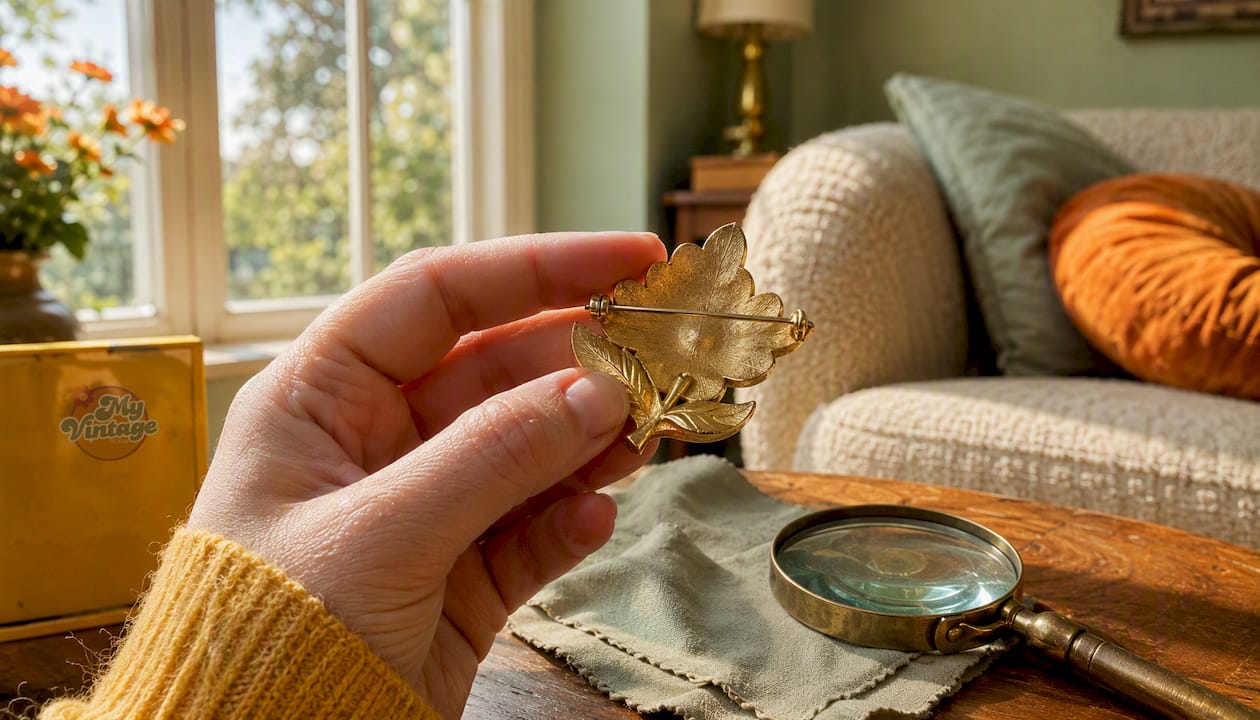
Mark evolution also helps with dating. The WorthPoint Dictionary entry for Sarah Coventry and Emmons documents how marks changed across the company’s lifespan, and matching a mark to a dated catalogue image is one of the most reliable ways to narrow the production window.
Decade | Style cues | Mark/construction notes |
1950s | Floral motifs, aurora borealis stones, refined gold-tone | Early SARAH COVENTRY stamps; clip-backs standard |
1960s | Geometric shapes, mod silhouettes, silver-tone finishes | © SARAH COV variants appear; larger stone settings |
1970s | Chunky pendants, earth tones, textured metals | SARAH COV abbreviations more common |
Early 1980s | Simpler designs, lighter plating | Production quality more variable before bankruptcy |
Are Sarah Coventry pieces worth anything?
The honest answer is: it depends. Because the pieces are costume jewellery made from base metals and glass or plastic stones, there is no intrinsic precious-metal value. Most pieces are affordable and plentiful, which is actually part of their charm for new collectors. You can build a beautiful collection without spending a fortune.
That said, certain pieces command real premiums. The primary value drivers are:
Rarity: Hostess pieces and limited-edition lines were produced in smaller numbers and are consistently more sought after.
Named lines: Pieces that can be matched to a named set such as “Blue Lagoon” or a mid-century parure attract higher collector interest than anonymous items.
Condition: Plating wear, missing stones, and damaged clasps reduce value noticeably. A complete, unworn piece in original packaging is worth considerably more than a worn equivalent.
Completeness: A full parure (necklace, bracelet, brooch, and earrings) in matching condition is more desirable than individual pieces sold separately.
Provenance: Original boxes, catalogues, or a documented hostess origin all add to the story and the price.
Pro Tip: Before agreeing to a price, search recently completed sales on mainstream vintage marketplaces and check specialist auction records for the same named line or a comparable piece. Sold prices, not asking prices, are what the market actually supports.

Where can you buy Sarah Coventry in the UK?
The UK market for vintage costume jewellery is lively, and Sarah Coventry pieces turn up in several reliable channels. Specialist vintage shops and vetted online vintage retailers are the safest starting point, as reputable sellers will describe condition accurately, photograph marks clearly, and offer returns. Antiques fairs and estate sales can yield excellent finds at fair prices, though you will need to do your own identification on the spot.
Online marketplaces with buyer-protection policies are widely used by UK collectors, but they require more caution. Ask every seller for close photographs of the mark, the back, the clasp or clip mechanism, and any original packaging. Request a condition report that specifically mentions plating wear and stone integrity. Ask whether the piece was a hostess gift or came from an estate, and confirm the returns policy and whether postage is tracked.
Knowing when to walk away matters too. If a seller cannot or will not photograph the mark, if the asking price is significantly above comparable sold listings, or if the condition description is vague, trust your instincts. There are always more pieces in the market.
How to care for and store your pieces
Costume jewellery with plated base metals needs gentle handling. Harsh chemical cleaners, ultrasonic baths, and abrasive polishes will strip plating and damage stone settings. For everyday grime, a soft, barely damp cloth is usually sufficient. Work gently around stone settings rather than soaking them, as moisture can loosen adhesive on glued rhinestones. Always dry pieces thoroughly before storing.
Storage is where many collectors go wrong:
Keep pieces in individual soft pouches or small zip-lock bags to prevent scratching and tangling.
Add anti-tarnish strips to storage boxes for silver-tone pieces, as they slow oxidation noticeably.
Avoid storing jewellery in bathrooms or anywhere with fluctuating humidity and temperature, which accelerates plating deterioration.
Keep pieces away from direct sunlight, which can fade plastic and acrylic stones over time.
When a piece needs repair beyond a simple clean, think carefully before attempting it yourself. A professional conservator or experienced jewellery restorer is worth consulting for broken clasps, loose stones, or significant plating loss. For pieces with collector value, some patina is acceptable and even expected; heavy-handed restoration can reduce rather than increase desirability.
Pro Tip: A light application of Renaissance Wax on metal surfaces (avoiding stones) offers a protective barrier against humidity and handling, and is widely used by conservators for exactly this kind of plated costume jewellery.
How to spot fakes and misattributed pieces
Misattribution is a more common problem than outright faking. Sellers sometimes list unsigned vintage costume jewellery as “Sarah Coventry style” or even claim it is Sarah Coventry without a genuine mark. Always verify the mark yourself from photographs rather than relying on a seller’s attribution.
Red flags to watch for:
Marks that look machine-etched or printed rather than stamped into the metal, or marks that appear unusually crisp and new on an otherwise aged piece.
Plating that looks suspiciously bright and even on a piece claimed to be from the 1950s or 1960s, suggesting re-plating or a much later reproduction.
Sellers who are reluctant to photograph the back or mark, or who describe a piece as “unsigned but Sarah Coventry” without explanation.
Prices far above comparable sold listings without a clear reason such as original packaging or a documented hostess provenance.
To verify, compare the mark against documented examples in the WorthPoint Dictionary or in the reference book Identifying Sarah Coventry Jewelry, 1949–2009. For online purchases, use platforms with buyer protection, insist on tracked postage, and prefer sellers who accept returns. If something feels off, it usually is.
Key takeaways
Signed Sarah Coventry pieces in good condition, particularly hostess items and named lines, offer genuine collector value at accessible price points for UK buyers.
Point | Details |
Check the mark first | Look for SARAH COVENTRY, SARAH COV, or © SARAH COV stamped on the back of every piece. |
Hostess pieces are rarer | Items given to home-party hosts were produced in smaller numbers and typically fetch higher prices. |
Condition drives value | Plating wear, missing stones, and broken clasps all reduce desirability; original packaging adds to it. |
Date by decade cues | 1950s and early 1960s pieces show finer craftsmanship; 1970s pieces are bolder and more variable. |
My Vintage for vetted UK buying | My Vintage offers curated vintage jewellery with clear condition descriptions and UK shipping. |
My Vintage: a vetted UK source for vintage costume jewellery
If you would rather skip the uncertainty of unvetted marketplace listings, My Vintage is a trusted alternative. As a UK-based vintage retailer with over two decades of experience, My Vintage curates authentic pieces with honest condition descriptions, clear photographs, and straightforward returns for UK buyers. Whether you are after a 1960s gem brooch or a 1950s diamanté pendant necklace, each listing is presented with the detail a collector actually needs.
My Vintage stocks a range of vintage costume jewellery and accessories alongside its broader collection of authentic vintage clothing and homeware. If you have a question about a specific piece’s condition or provenance, the team is happy to help. Browse the full vintage jewellery collection and find something genuinely worth wearing.
Useful sources for further research
A short list of reliable references for marks verification, catalogue research, and pricing:
Wikipedia: Sarah Coventry — a solid starting point for company history, production timeline, and bankruptcy facts.
WorthPoint Dictionary: Sarah Coventry/Emmons — documents mark variants and links production history to the Emmons sister brand; useful for mark identification.
WorthPoint Articles — the collector appeal article covers hostess pieces, named lines, and what drives prices.
Life in the Finger Lakes — local history piece on the rise and fall of Sarah Coventry, useful for cultural context and marketing reach.
Identifying Sarah Coventry Jewelry, 1949–2009 — the standard collector reference book for marks, named lines, and dating; worth owning if you collect seriously.
Wikimedia Commons: Sarah Coventry jewellery — a free image archive useful for visual comparison when identifying pieces.
For pricing research, always use recently completed sales rather than current asking prices, and cross-reference at least two sources before committing to a purchase.
Recommended


Comments