


Vintage Lingerie: Style, Nostalgia and Sourcing
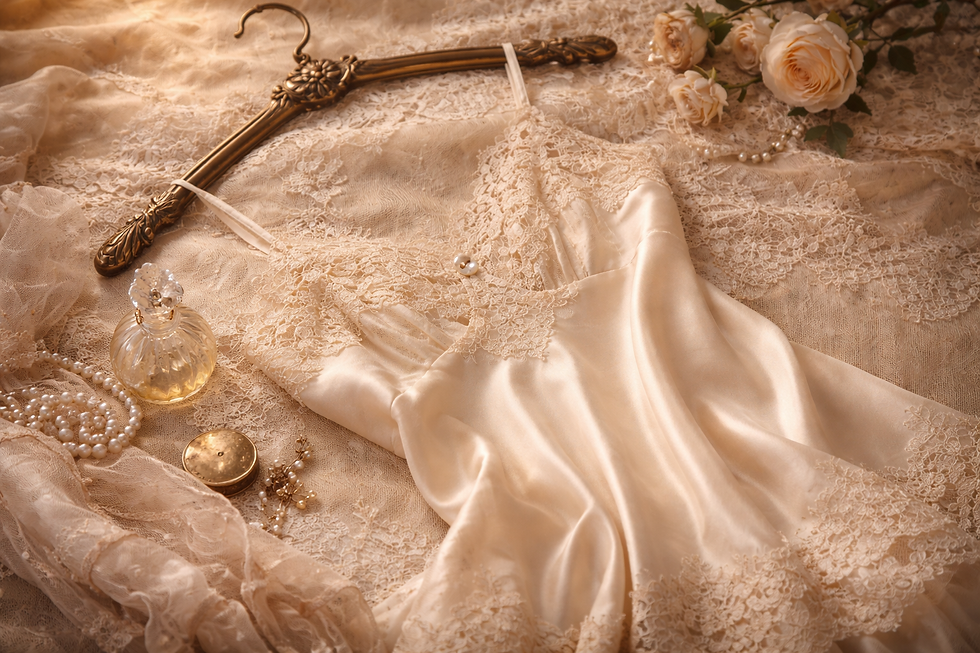
Many believe vintage lingerie is a niche pursuit reserved for collectors and costume enthusiasts, but rising market trends tell a different story. The lingerie market is experiencing a renaissance, fuelled by the resurgence of vintage styles and a growing appreciation for quality craftsmanship. This article explores the history, types, and appeal of vintage lingerie, offering practical guidance on sourcing authentic pieces, styling them with confidence, and caring for these treasured garments. Whether you’re drawn to the glamour of 1950s slips or the bohemian charm of 1970s camisoles, you’ll discover how vintage lingerie can add unique character to your wardrobe.
Table of Contents
Key Takeaways
Point | Details |
Defined appeal | Vintage lingerie is valued for its unique craftsmanship and timeless style. |
Market growth | Demand for vintage lingerie is increasing, driven by sustainability and nostalgia. |
Sourcing tips | Carefully assess authenticity, condition, and reputable sellers when shopping. |
Styling flexibility | You can style vintage pieces for everyday wear or special outfits. |
Care essentials | Proper cleaning and storage help your vintage lingerie last for generations. |
What Defines Vintage Lingerie?

Vintage lingerie refers to intimate garments dating from the 1920s through the 1980s, distinguished by their unique fabrics, construction techniques, and design sensibilities. These pieces represent eras when lingerie was crafted with meticulous attention to detail, using luxurious materials that simply aren’t common in today’s fast fashion landscape.
Typical vintage lingerie pieces include:
Full slips and half slips in silk or nylon
Structured corsets and basques with boning
Bullet bras and longline bras
French knickers and tap pants
Camisoles and teddies with delicate lace trim
What makes vintage lingerie stand out is the exceptional craftsmanship. Seams were often hand-finished, lace was carefully appliquéd, and fabrics were chosen for their drape and durability. The resurgence in vintage styles such as corsets and teddies reflects a modern appreciation for these qualities.
“Vintage lingerie represents an era when intimate apparel was designed to last, not just for a season but for years of wear.”
A common misconception is that vintage automatically means damaged or old-fashioned. In reality, many vintage pieces have survived precisely because they were well-made and carefully stored. The evolution of vintage style shows how these classic designs continue to influence contemporary fashion, proving their timeless appeal.
A Brief History: Vintage Lingerie Through the Ages

Understanding the evolution of vintage lingerie helps you appreciate the distinct character of pieces from different decades. Each era brought its own aesthetic, shaped by social changes, technological advances, and cultural movements.
Decade | Key Styles | Cultural Context | Notable Features |
1920s | Bandeau bras, step-ins | Flapper liberation | Minimal structure, boyish silhouettes |
1940s | Utility lingerie, rayon slips | Wartime rationing | Practical designs, synthetic fabrics |
1950s | Bullet bras, full slips | Post-war glamour | Structured shapes, luxurious materials |
1970s | Soft bralettes, camisoles | Bohemian freedom | Natural fibres, relaxed fit |
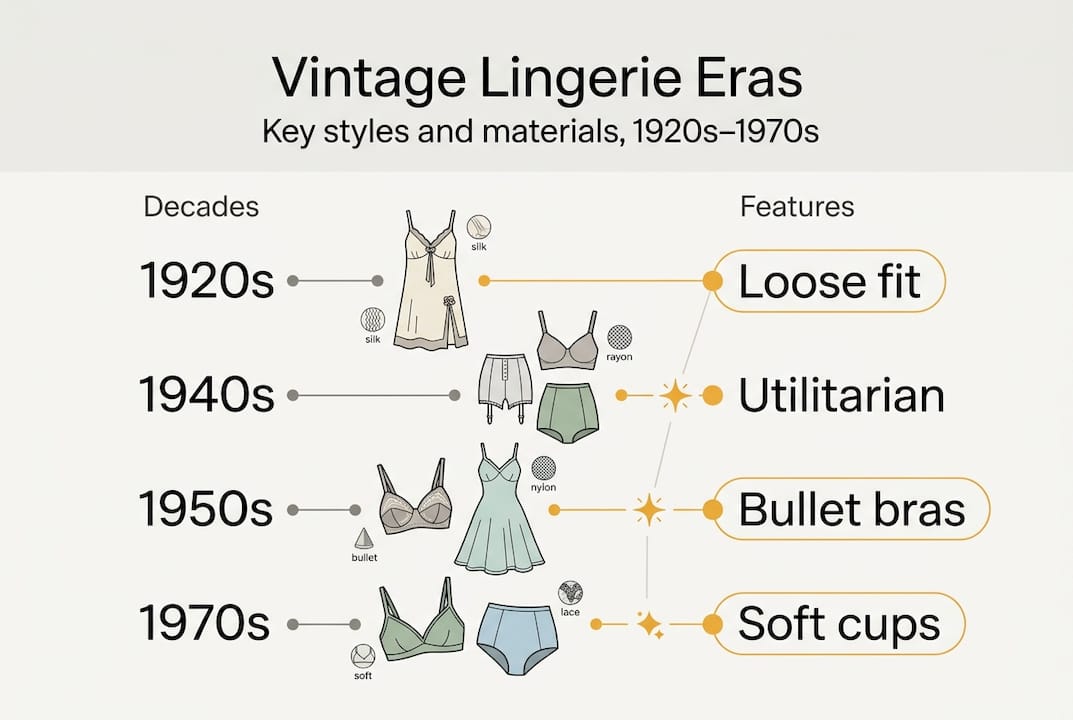
The 1920s marked a dramatic shift as women embraced looser, more comfortable undergarments that complemented the straight silhouettes of flapper dresses. Corsets gave way to elastic girdles and bandeau-style bras that flattened rather than enhanced curves.
During the 1940s, wartime restrictions meant lingerie became more utilitarian. Silk was reserved for parachutes, so manufacturers turned to rayon and early synthetics. Despite these limitations, designers maintained elegance through clever construction and minimal embellishment.
The 1950s brought a return to femininity and structure. Bullet bras created the iconic pointed silhouette, whilst full slips in luxurious fabrics became wardrobe essentials. This era represents peak craftsmanship in vintage lingerie, with pieces often featuring multiple layers of construction.
By the 1970s, the mood shifted towards natural comfort. Soft cup bras, flowing camisoles, and unstructured designs reflected the decade’s bohemian spirit. These pieces often incorporated natural fibres and earthy colours.
The ongoing influence of vintage fashion on contemporary trends demonstrates how these historical styles continue to resonate. You can see echoes of each era in today’s lingerie designs, from the return of high-waisted knickers to the popularity of bralettes. For more context on how vintage aesthetics have evolved, explore our recent vintage arrivals and discover jewellery trends and vintage parallels.
Why Choose Vintage Lingerie Today?

The appeal of vintage lingerie extends far beyond nostalgia. In 2026, these pieces offer tangible benefits that align with contemporary values and style preferences.
Quality and uniqueness over fast fashion
Vintage lingerie was built to last. The fabrics, construction methods, and attention to detail far exceed what you’ll find in most modern mass-produced alternatives. Each piece carries its own history and character, ensuring you’ll never encounter someone wearing the same item.
Sustainability and conscious consumption
Demand for sustainable lingerie is growing as consumers recognise the environmental cost of fast fashion. Choosing vintage means giving existing garments new life rather than contributing to textile waste. It’s fashion with a lighter footprint.
Nostalgic styling that’s current
Vintage lingerie taps into the current trend for romantic, feminine aesthetics. The delicate laces, silk fabrics, and thoughtful details create a sense of occasion that modern basics often lack. These pieces make you feel special, whether worn privately or styled as outerwear.
Pro Tip: Vintage sizing differs significantly from modern standards. A 1950s size 12 typically corresponds to a modern UK size 8-10. Always check actual measurements rather than relying on size labels, and remember that vintage lingerie often had less stretch than today’s elasticated designs.
The growing market for vintage lingerie also reflects increased size inclusivity. Whilst historical sizing was limited, the variety of decades and styles available means there’s something for different body types. Check our March arrivals and size options to see the range available.
How to Source Genuine Vintage Lingerie

Finding authentic vintage lingerie requires knowledge and patience, but the reward is owning truly special pieces. Here’s how to navigate the market confidently.
Where to look
Specialist vintage shops with curated collections
Reputable online sellers with detailed descriptions and photos
Vintage fairs and markets where you can inspect items in person
Estate sales and auctions for rare finds
Shopping Method | Advantages | Considerations |
Online | Wider selection, convenient browsing, detailed photos | Cannot inspect fabric condition in person |
In person | Can assess quality directly, try for fit, immediate purchase | Limited selection, requires travel |
Specialist shops | Expert authentication, quality guarantee | Higher prices reflect curation |
Markets/fairs | Potential bargains, variety of sellers | Quality varies, authentication needed |
The increasing demand for quality vintage means competition can be fierce for exceptional pieces. Developing relationships with trusted sellers gives you access to new stock before it’s widely advertised.
Verifying authenticity
Authentic vintage lingerie displays certain characteristics:
Original labels with period-appropriate fonts and information
Natural fibres or early synthetics consistent with the claimed era
Construction techniques like French seams or hand-finished details
Metal zips or hook-and-eye closures typical of the period
Wear patterns consistent with age
Pro Tip: Before purchasing, ask sellers specific questions: What’s the exact fabric composition? Are there any repairs or alterations? What are the precise measurements? Can you provide additional photos of labels and construction details? Reputable sellers welcome these enquiries and provide thorough answers.
For inspiration on what’s currently available, browse our newest spring finds to see authenticated vintage pieces.
Styling Vintage Lingerie: Modern Approaches
Vintage lingerie offers versatile styling possibilities that extend beyond traditional intimate wear. The key is balancing period authenticity with contemporary sensibilities.
Wearing as outerwear
Vintage-inspired lingerie is influencing current fashion trends, making it perfectly acceptable to style slips and camisoles as standalone pieces. Pair a silk slip with a leather jacket and boots for an edgy contrast, or layer a lace camisole under a blazer for subtle texture.
Layering with modern basics
Vintage lingerie works beautifully when integrated with contemporary pieces. Try these combinations:
A 1950s full slip under a sheer midi dress
A vintage bralette peeking from beneath a loose tank top
French knickers styled as shorts with an oversized jumper
A silk camisole tucked into high-waisted trousers
Accessorising with period-appropriate details
Complete your look by accessorising with jewellery that complements your vintage lingerie’s era. A 1940s slip pairs beautifully with Art Deco brooches, whilst 1970s pieces suit bohemian pendant necklaces.
Mixing eras for unique expression
Don’t feel constrained by strict period accuracy. A 1920s step-in can look stunning with 1970s platform shoes, whilst a 1950s bullet bra works under a modern band tee. The joy lies in creating combinations that reflect your personal style rather than recreating historical looks exactly.
Caring for and Preserving Vintage Lingerie
Proper care ensures your vintage lingerie remains beautiful for years to come. These delicate garments require gentle handling and appropriate storage.
Cleaning methods by fabric type
Silk: Hand-wash in lukewarm water with pH-neutral detergent. Never wring; roll in a towel to remove excess water.
Cotton and linen: Can tolerate slightly warmer water but still hand-wash to protect delicate construction.
Rayon and early synthetics: Extremely delicate when wet. Spot-clean when possible or use professional cleaning.
Lace trim: Support lace areas during washing to prevent tearing. Consider placing items in a mesh bag.
Storage essentials
Store vintage lingerie in a cool, dark, dry environment. Light causes fading and weakens fibres, whilst humidity encourages mould. Use acid-free tissue paper to stuff cups and maintain shape. Avoid plastic bags, which trap moisture; opt for breathable cotton storage bags instead.
Caring for delicate vintage fabric helps preserve both beauty and value. Never hang heavy pieces like corsets, as this stretches the fabric. Instead, store flat or carefully folded with tissue paper between layers.
Pro Tip: If you acquire a piece with minor damage, don’t despair. Small holes can be carefully darned, loose seams can be re-stitched, and missing hooks can be replaced with period-appropriate alternatives. For significant damage, consult a textile conservator rather than attempting repairs yourself. Sometimes, embracing imperfections adds to a piece’s character and story.
For comprehensive guidance, review our vintage care advice, preservation tips, and storage guidance.
Discover Unique Vintage Finds with My Vintage
If this exploration of vintage lingerie has sparked your curiosity, you’ll find a carefully curated selection of authentic pieces waiting to be discovered. At My Vintage, we’ve spent nearly two decades sourcing exceptional vintage items, from intimate apparel to accessories that complete your look.
Our collection spans multiple decades, offering everything from structured 1950s foundations to flowing 1970s camisoles. Each piece is authenticated and described in detail, with accurate measurements to help you find the perfect fit. Beyond lingerie, explore our vintage homeware selection to bring retro charm to your living space, or browse our full range to discover more vintage items that speak to your personal style. We regularly update our stock with new arrivals, and our care guides ensure your treasures remain beautiful for years to come.
Frequently Asked Questions
How do I know if a lingerie piece is genuinely vintage?
Check labels, fabric composition, construction details like French seams, and verify the seller’s reputation. High-quality vintage lingerie displays period-appropriate materials and techniques that differ from modern mass production.
What are common materials found in vintage lingerie?
Most vintage lingerie uses natural fibres like silk, cotton, and rayon, along with early synthetics from the mid-century. Vintage lingerie features unique fabrics that reflect the manufacturing capabilities and aesthetic preferences of each era.
Is vintage lingerie suitable for everyday wear?
With proper care and styling, many vintage pieces work beautifully for daily wear or special occasions. Vintage-inspired lingerie influences contemporary fashion, making these pieces feel current rather than costume-like when styled thoughtfully.
How should I clean delicate vintage lingerie?
Hand-wash in lukewarm water using gentle detergent, then air dry away from direct sunlight. Caring for delicate vintage fabric requires patience, but proper cleaning preserves both beauty and value for years to come.
Why is vintage lingerie more expensive than modern alternatives?
Authentic vintage pieces reflect superior craftsmanship, rare materials, and the time invested in sourcing and authenticating items. You’re paying for quality that has literally stood the test of time, plus the uniqueness of owning something that cannot be replicated.
Recommended

Comments